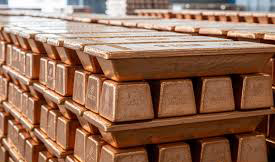
Karachi: Pakistan’s copper exports to China have surpassed the $1.30 billion mark in just eight months of the current fiscal year, emerging as one of the most striking trends in the country’s industrial export landscape and signaling a potentially transformative shift in its non-ferrous metals trade.
According to customs export data, copper ingots exports, which stood at $52.894 million in July 2025, climbed steadily month after month, reaching $393.126 million in March alone, a remarkable six-fold increase over the period.
Of the total $1.30 billion recorded during the eight-month period, $1.02 billion comprised copper ingots exports to China, while the remaining $280 million represented other copper-related products, underscoring copper’s strategic importance across power grids, electronics and clean-energy supply chains globally.
Beyond China, Pakistani copper shipments are also reportedly reaching the United States and Canada, reflecting growing international acceptance of the country’s processed and recycled metal products in competitive global markets, industry sources said.
Industry sources attributed much of this momentum to Pakistan’s Export Facilitation Scheme (EFS), which is increasingly being recognised as a key policy instrument in structuring the country’s recycled metals trade. Under S.R.O. 1435(I)/2025 issued by the Federal Board of Revenue, duties and taxes on imported iron and steel content are collected at the import stage, while copper recovered through domestic processing is cleared for export as a value-added product under a documented and closely monitored regulatory system.
The arrangement, they said, has helped strike a workable balance between revenue protection and export promotion, designed to curb misuse, discourage undocumented trade flows, and promote value addition within Pakistan rather than the export of raw or unprocessed material.
The policy shift has also generated a broader economic impact across interconnected sectors of the supply chain, with exporters, processors, refiners, logistics operators, warehouse service providers, labour contractors and small and medium enterprises all reported to have benefited from the structured framework and the volumes it has helped generate.
The sector’s rapid growth is increasingly visible in Pakistan’s overall foreign exchange earnings and industrial export figures, providing a welcome boost at a time when the country has been actively working to diversify its export base.
Looking ahead, industry sources are projecting a significantly larger trajectory for the segment. With global demand for copper continuing to rise, driven by the electronics industry, energy infrastructure development, electric vehicles and industrial manufacturing, copper prices have held firm over the past three months, despite geopolitical tensions. Against this backdrop, industry estimates suggest Pakistan’s copper export potential could grow to between $2 billion and $3 billion in the coming years, provided the current policy environment remains intact.
However, sources cautioned that regulatory consistency and transparency will be critical to sustaining the long-term credibility and stability of the export channel.
For a country long dependent on a narrow export base dominated by textiles, the emergence of copper as a billion-dollar export commodity within a single fiscal year represents a meaningful diversification milestone. If the current framework is implemented effectively and consistently, Pakistan’s recycled non-ferrous metals sector could evolve into a far more prominent contributor to industrial exports and foreign exchange generation. The challenge ahead, as industry sources see it, lies not in replicating the numbers but in institutionalising the policy discipline and transparency needed to sustain and scale them.